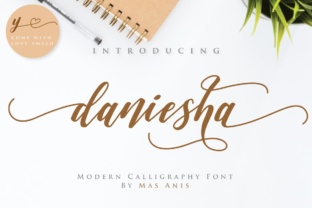
Daniesha – A Beautiful Calligraphy Font for Business Branding
Last Tuesday, I stood in my small studio staring at a stack of candle labels that just didn't feel right. The wax was poured perfectly, the fragrance blend was lovely, and the glass jars looked elegant on the shelf. But the moment someone picked up a candle, the label didn't match the quality of what was inside. The typography felt generic, almost like an afterthought. I knew I needed a typeface that could carry the warmth and personality of my handmade products. That's when I discovered Daniesha, a beautiful calligraphy font that completely shifted how I approach brand visuals. Among the many Script Handwritten Fonts I've tried over the years, Daniesha has a presence that feels both graceful and alive, making every design element feel more intentional and memorable.
Daniesha Calligraphy Font for Special Occasion Typesetting
When you run a small product-based business, you quickly learn that special occasions drive a huge portion of your sales. Weddings, anniversaries, baby showers, holiday gifting — these moments deserve typography that feels celebratory without becoming clichéd. Daniesha belongs to the Script Handwritten category of Fonts, and its flowing letterforms bring an elegant yet approachable warmth to any occasion-themed design. I started using Daniesha on my limited-edition holiday candle labels last winter, and the difference was immediate. The font's dancing quality — the way each letter seems to move with a natural rhythm — made phrases like "Winter Pine & Clove" and "Hand-Poured with Care" feel genuinely special. For business owners creating wedding favor tags, anniversary cards, or seasonal packaging, Daniesha offers the kind of versatile beauty that works across all formats without needing complicated adjustments.
The real magic of Daniesha for special occasion typesetting lies in its extensive character options. When you're designing a wedding invitation suite or a milestone celebration card, having access to alternate characters and ligatures means you can customize the look so it never feels repetitive. I've used Daniesha for bridal shower thank-you tags where the alternate letterforms allowed me to create a layout that looked completely bespoke — something a client might assume required custom lettering. For entrepreneurs who offer personalized products or seasonal collections, this level of variety inside one font file is genuinely useful. It means your Valentine's Day packaging can look different from your Mother's Day release, even when you're working within the same brand system.
Using Daniesha as a Headline Font for Product Packaging
Packaging is often the first physical interaction a customer has with your brand, and the headline typography sets the emotional tone before anyone reads a single detail. I learned this when I redesigned my candle box lids. The previous font I used for product names was a simple serif — clean but forgettable. Switching to Daniesha as my headline typeface transformed the unboxing experience. Among Script Handwritten Fonts, Daniesha has a dancing quality that catches light differently on printed surfaces, almost as if the letters were hand-lettered directly onto the packaging. When I placed "Vanilla Oakmoss" in Daniesha across the top of a kraft box, the contrast between the organic calligraphy and the earthy paper created something that felt both premium and personal.
What makes Daniesha particularly effective for product packaging headlines is its readability at display sizes while retaining an artistic flourish. For candle jars, skincare bottles, soap boxes, or bakery bags, the product name is typically the visual anchor of the label. Daniesha holds that anchor position beautifully without competing with secondary information. I recommend using it for the hero text — the product name or collection title — and pairing it with a clean sans serif for ingredient lists, weight information, or usage instructions. This hierarchy keeps the packaging functional while giving it a distinctive, boutique feel that customers associate with quality and care. The font works beautifully across different printing methods too, from digital labels to foil stamping on textured paper.
Daniesha Script Handwritten Font for Creating a Consistent Brand Identity
Consistency is something I struggled with during my first two years in business. My Instagram graphics used one style, my packaging used another, and my thank-you cards looked completely unrelated to either. Customers might not consciously notice this inconsistency, but they feel it — it erodes trust and makes a brand less recognizable over time. When I committed to building a cohesive visual system, Daniesha became the typographic thread that tied everything together. As a Script Handwritten choice among the Fonts available to small business owners, Daniesha offers enough versatility to appear across multiple touchpoints without feeling overused. I use it on my logo wordmark, product labels, social media quote graphics, and even the header of my order confirmation emails.
The dancing quality mentioned in the font's description is not just a marketing phrase — it genuinely comes through in practical use. Each letter has a sense of movement that makes even static text feel warm and inviting. For a brand that sells handmade goods, this is invaluable. Customers browsing your online shop or scrolling through your social feed should immediately sense the human touch behind your products. Daniesha communicates that handcrafted feeling without looking amateurish or inconsistent. When I post a new candle collection on Instagram, the product name set in Daniesha over a soft lifestyle photo creates a cohesive look that followers have come to recognize, even without seeing my logo. That level of brand recognition, built through consistent typography choices, is something every small business owner should aim for.
Pairing Daniesha with Clean Sans Serif Fonts for Readable Designs
One of the first questions I get from fellow makers when they see my updated packaging is about font pairing. Daniesha is a display font with personality, which means it performs best when given room to shine alongside a quieter supporting typeface. In practice, I've found that pairing Daniesha with a clean sans serif creates a balanced, modern look that works across both print and digital applications. The Script Handwritten nature of Daniesha means it carries a lot of visual texture, so letting it anchor the headline while a straightforward Font handles body text prevents the overall design from feeling busy or hard to read.
For small labels — think lip balm tubes, mini candle tins, or jewelry tags — readability becomes even more important. Daniesha works beautifully at moderate to large display sizes where its flowing strokes can be fully appreciated, but I avoid using it for tiny ingredient lists or care instructions. Instead, I set those details in a neutral sans serif like Montserrat, Open Sans, or Work Sans. The contrast between Daniesha's organic, dancing letterforms and the geometric simplicity of a sans serif creates a visual rhythm that feels professional and thoughtfully designed. For business owners creating their own graphics in Canva, Adobe Express, or similar tools, this pairing approach is straightforward to implement and makes a noticeable difference in how polished the final output looks.
Daniesha for Logo Design and Memorable Business Touchpoints
A logo doesn't need to be complicated to be effective — it needs to be memorable and reflective of the brand's personality. When I worked on refining my candle business logo, I tested Daniesha as the primary wordmark typeface, and it immediately gave the lockup a boutique feel that resonated with my target customers. Among the many Script Handwritten Fonts I auditioned for this purpose, Daniesha stood out because its character set includes enough alternate letterforms to create a logo that looks custom without requiring a professional lettering artist. For entrepreneurs who need to bootstrap their branding in the early stages, this is a practical advantage that shouldn't be overlooked.
Beyond the logo itself, Daniesha can bring continuity to all the small touchpoints that shape a customer's experience. I use it on the circular sticker that seals my tissue paper, on the small "Thank You" printed inside each box, and on the care instruction cards tucked beneath the candle lid. These moments might seem minor, but collectively they communicate that the brand pays attention to detail. Customers notice when a thank-you card shares the same typographic DNA as the product label and the website banner — it feels intentional, not accidental. For small businesses competing with larger brands, this consistency is one of the most accessible ways to build perceived value and customer loyalty without increasing production costs.
Using Daniesha for Social Media Graphics and Online Shop Visuals
Running an online shop means your visuals have to do the heavy lifting that a physical store associate would normally handle. Product photos get someone to click, but the typography on your banners, collection titles, and promotional graphics tells them whether your brand is worth their time. Since incorporating Daniesha into my social media templates, I've noticed that posts featuring the font tend to receive more saves and shares — a signal that the visual presentation is resonating. Script Handwritten Fonts with a dancing quality like Daniesha have a natural ability to stop a scroll, especially when used thoughtfully as an accent rather than dominating every element on the screen.
For platform-specific advice, I've found that Daniesha works particularly well on Pinterest pins and Instagram story graphics, where the headline text needs to be readable at a glance on mobile screens. On a smartphone, font choices that look elegant at desktop size can quickly become illegible if the strokes are too thin or the letters too condensed. Daniesha maintains its clarity at typical social media display sizes, provided you don't set it below roughly 18–20 points in your design canvas. For Etsy shop banners, website hero sections, and email newsletter headers, the font adds a touch of personality that stock sans serif typefaces simply cannot replicate. If your brand revolves around handmade, artisanal, or personalized products, Daniesha helps your online presence feel as carefully crafted as the items you sell.
Practical Considerations Before Purchasing Daniesha for Commercial Use
Before you upload Daniesha into your design toolkit and start applying it across all your business materials, there are a few practical matters worth checking. First, look at the included file formats and make sure they're compatible with the software you use daily — whether that's Adobe Illustrator, Photoshop, Procreate, Canva, or Silhouette Studio for cutting machine projects. Not all Script Handwritten Fonts include the same range of file types, and you want to avoid purchasing a typeface that doesn't work smoothly with your workflow. Second, confirm whether the font includes the alternate characters, ligatures, and any stylistic sets mentioned in the description, as these are often what elevate Daniesha from a pretty script to a genuinely useful design asset.
Commercial licensing is another important checkpoint for small business owners. If you plan to use Daniesha on product packaging, merchandise, templates you sell to clients, or digital downloads, you need to verify that your license covers those specific applications. Many font licenses have restrictions around embedding, redistribution, or print run quantities, so reading the terms before purchasing saves headaches later. I also recommend checking for multilingual support if your customer base extends beyond English-speaking markets — having accented characters and extended Latin glyphs available means you won't hit a dead end when a wholesale order comes through from a retailer in a different country. These due-diligence steps might not be the most creative part of the process, but they ensure that your beautiful new font actually works for your business in every practical scenario you encounter.